
Introduction An LED can be turned ON or OFF using a digital pin, but controlling its brightness requires PWM (Pulse Width Modulation). The ESP32 supports PWM on almost all GPIOs,
Discover the power of the ESP32! Dive into in-depth tutorials, project ideas, and technical insights for Espressif’s flagship microcontroller. Perfect for hobbyists, makers, and developers looking to build advanced IoT applications with Wi-Fi and Bluetooth capabilities.
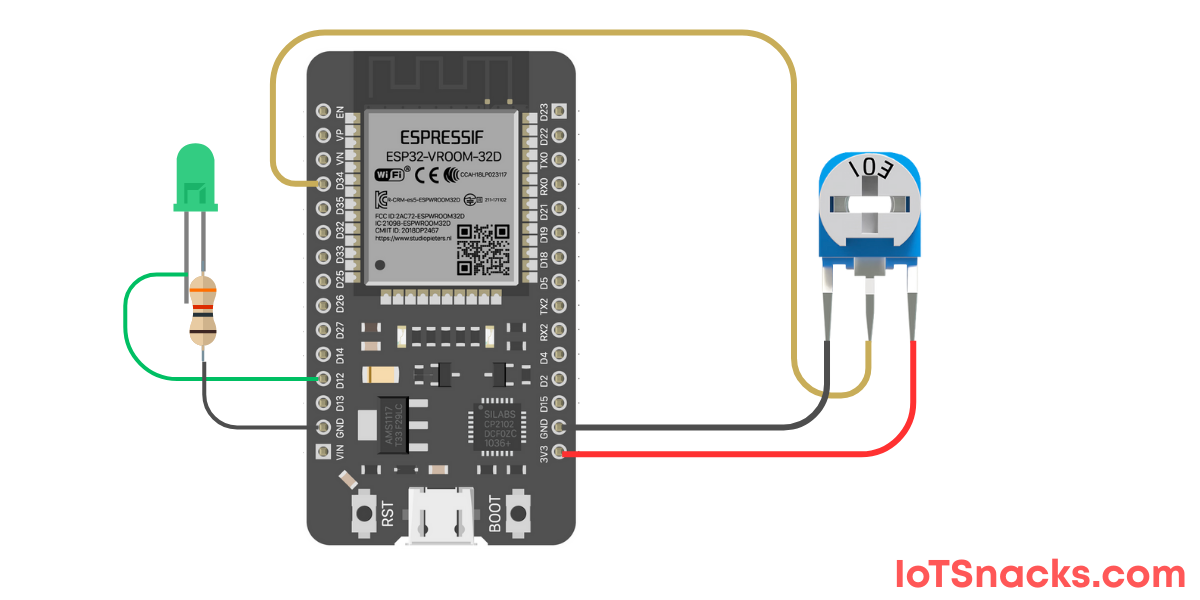
Introduction An LED can be turned ON or OFF using a digital pin, but controlling its brightness requires PWM (Pulse Width Modulation). The ESP32 supports PWM on almost all GPIOs,
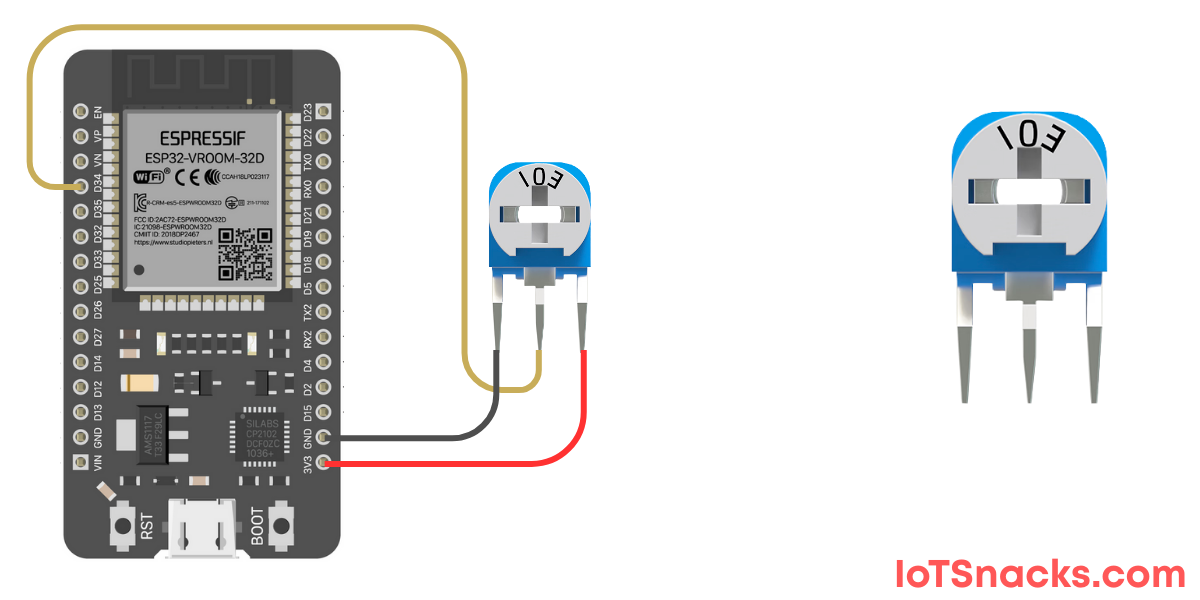
Introduction A potentiometer (often called a pot) is a variable resistor that allows you to adjust resistance manually by rotating its knob. It is commonly used for volume control, brightness
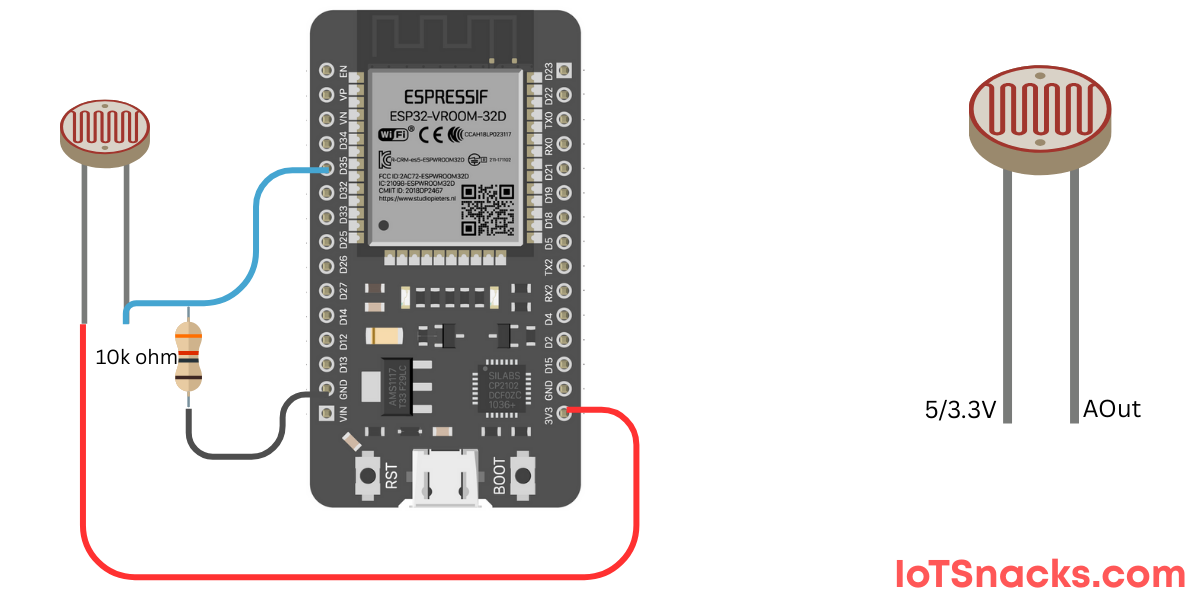
Introduction An LDR (Light Dependent Resistor) is a sensor that changes its resistance based on light intensity: By connecting the LDR to an analog input pin of ESP32, we can
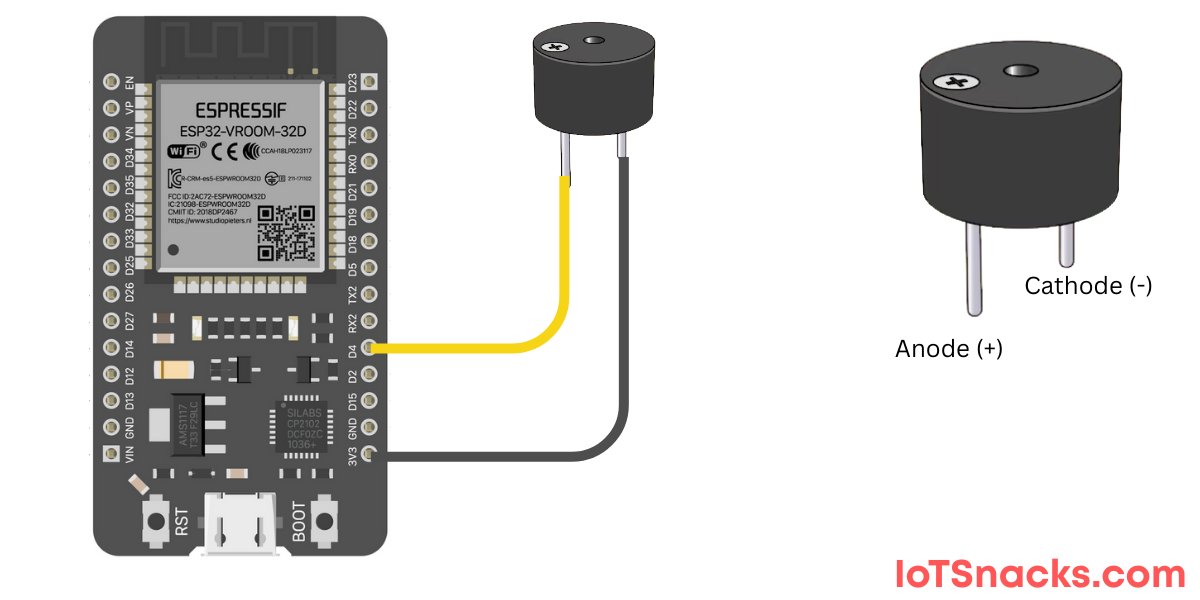
Introduction A buzzer is a simple sound-producing device that can be controlled using a microcontroller. There are two types of buzzers: In this tutorial, we’ll use a buzzer connected to

Introduction A Push Button is a simple input device used to control circuits. When pressed, it makes a connection between its terminals and sends a digital signal to the ESP32.

Introduction An RGB LED is a special LED that can emit Red, Green, and Blue light. By combining these three colors in different intensities, we can create almost any color.

Introduction The LED blink program is often called the “Hello World” of embedded systems. It’s the simplest way to test if your ESP32 is working properly and if you can

Introduction The ESP32 DOIT DevKit v1 is one of the most popular development boards for IoT and embedded systems projects. It’s a powerful microcontroller that comes with Wi-Fi and Bluetooth