

Introduction The ESP8266 does not have a true analog output, but it uses PWM (Pulse Width Modulation) to simulate it. With PWM, you can adjust the LED brightness smoothly instead
Unlock the potential of the ESP8266. Explore beginner-friendly guides, cost-effective project builds, and essential tips for using this popular and affordable Wi-Fi enabled microcontroller. Ideal for those venturing into the world of IoT on a budget.
Introduction The ESP8266 does not have a true analog output, but it uses PWM (Pulse Width Modulation) to simulate it. With PWM, you can adjust the LED brightness smoothly instead

Introduction RGB LEDs are special LEDs that combine Red, Green, and Blue in one package. By adjusting the brightness of each color, you can create millions of colors 🌈. In

Introduction The LDR (Light Dependent Resistor) is a simple but powerful sensor that detects light intensity. Its resistance decreases when light falls on it, and increases in darkness. By connecting
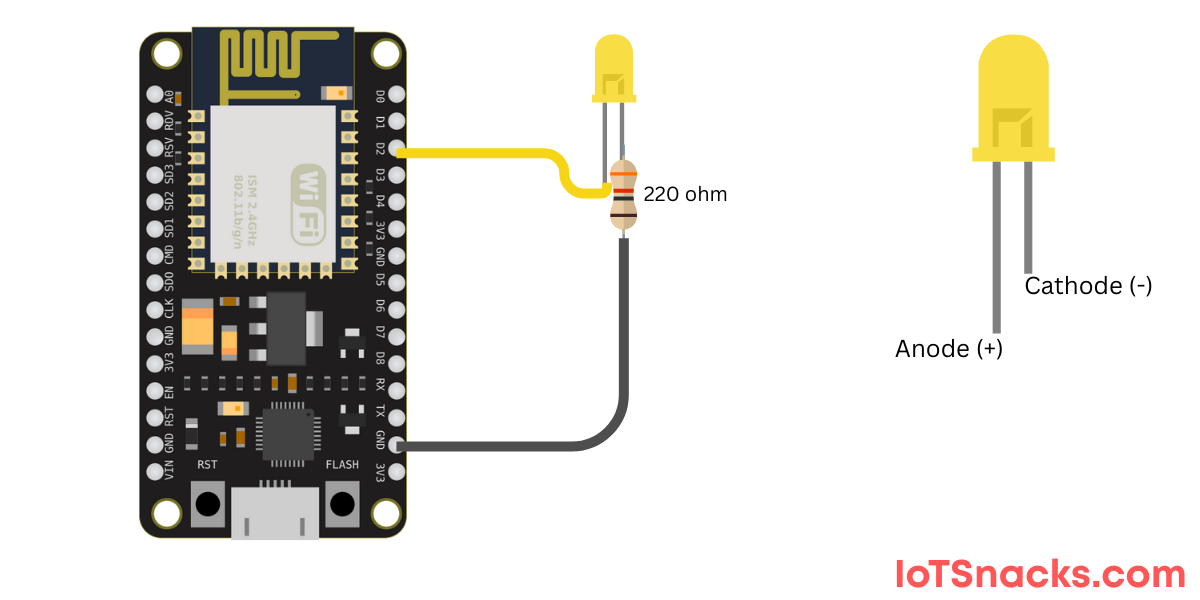
Introduction The Blink LED program is the first step for anyone learning micro controllers. With the ESP8266 Wi-Fi micro controller, it’s even more exciting because you can later control LEDs
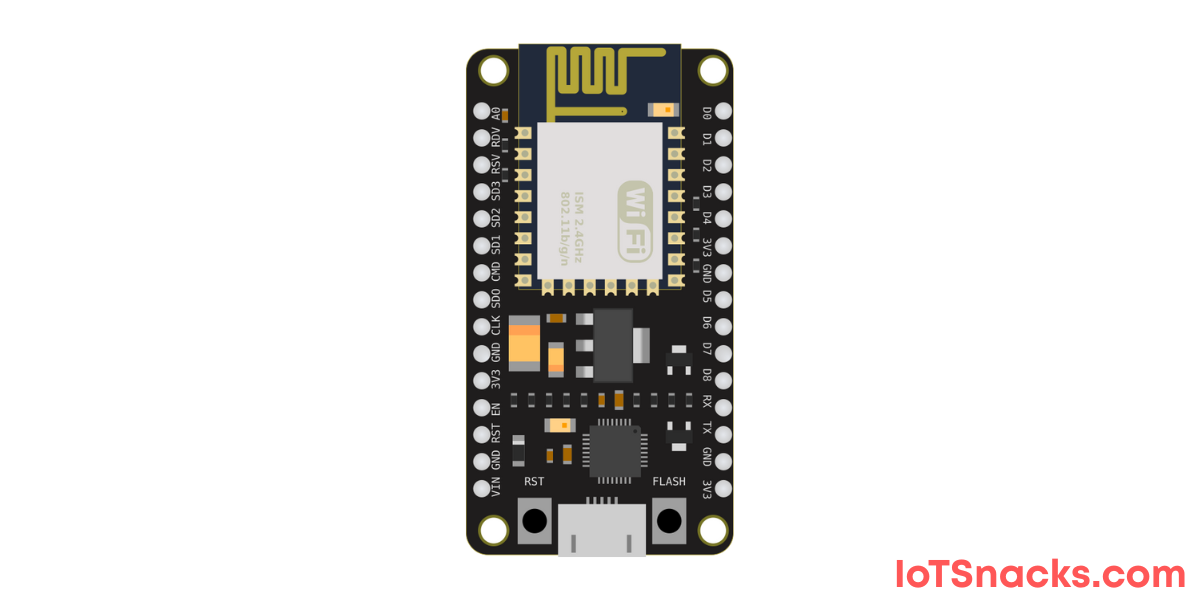
Introduction The ESP8266 is one of the most popular Wi-Fi microcontrollers used in IoT (Internet of Things) and embedded systems. It’s low-cost, powerful, and easy to program, making it perfect